
U.S.–Cuba Relations
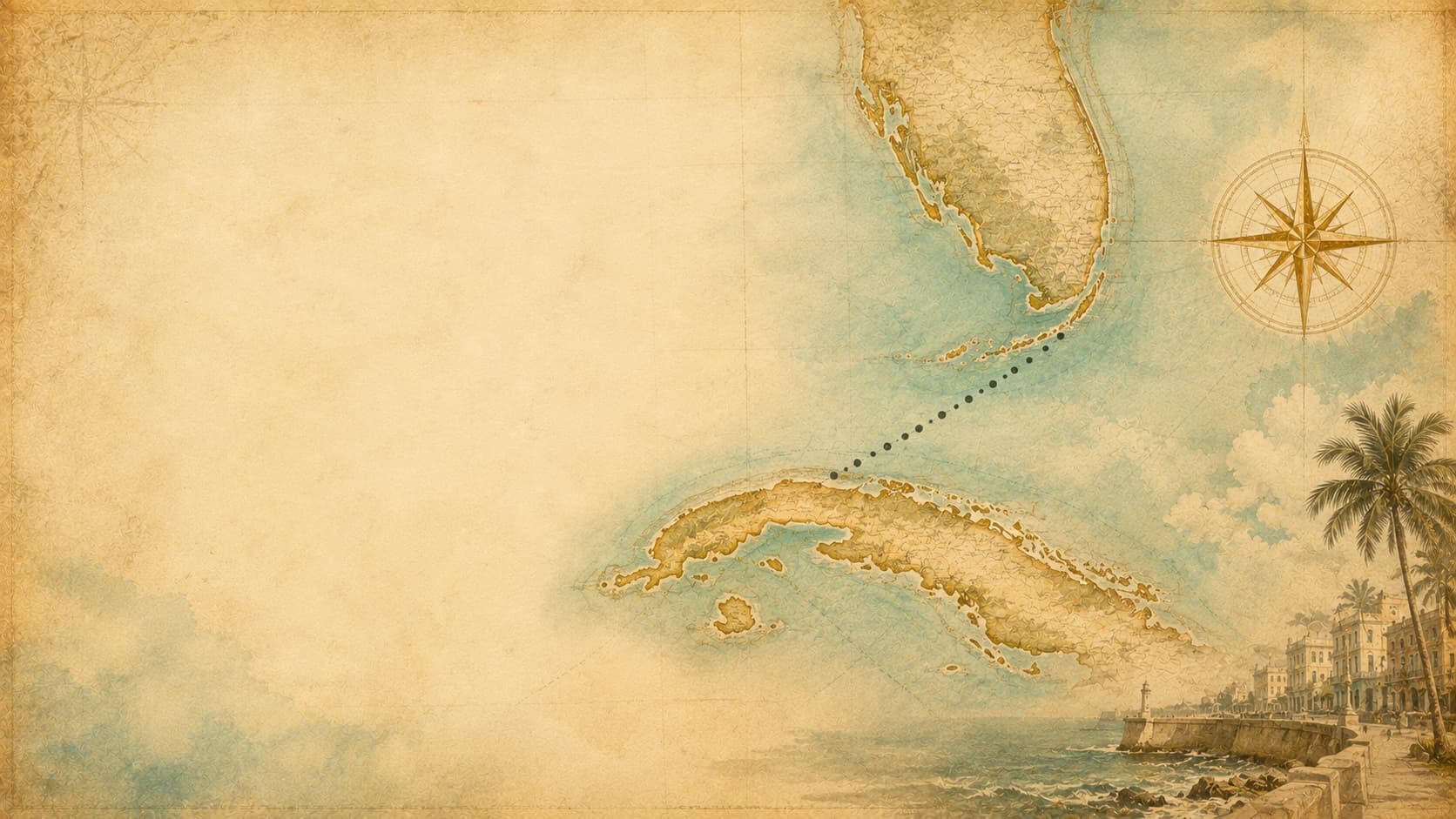
Few relationships are as entangled as the one between the United States and Cuba — ninety miles apart, bound by history, migration, and decades of political conflict.
A century of entanglement
The modern relationship began with the Spanish–American War of 1898, after which the United States exercised heavy influence over a nominally independent Cuba, including the Platt Amendment and the Guantánamo Bay lease.
Revolution and rupture
After 1959, the Cuban government nationalized American-owned property and aligned with the Soviet Union. The United States responded with an embargo, a failed invasion at the Bay of Pigs, and the brink-of-war Cuban Missile Crisis of 1962.
Migration and policy
Waves of Cuban migration — including the Freedom Flights, the Mariel boatlift, and the rafter crisis — repeatedly reshaped U.S. immigration policy and South Florida. Brief thaws, like the 2014–2016 restoration of diplomatic relations, have alternated with renewed restrictions.
An exile-informed view
For many Cuban exile families, U.S. policy toward Cuba is not abstract foreign policy but a deeply personal question about how to respond to a government that confiscated property, jailed dissidents, and drove their families from the island.
Related topics
Why Cuban Exiles Left
The waves of Cuban migration since 1959 — and the repression, confiscation, and fear that drove families from the island.
Read more →U.S.–Cuba RelationsThe U.S. Embargo on Cuba
What the U.S. trade embargo is, why it began, and why it remains one of the most debated topics in U.S.–Cuba relations.
Read more →HistoryThe Cuban Missile Crisis
The thirteen days in October 1962 when Soviet missiles in Cuba brought the world to the brink of nuclear war.
Read more →Cuban-American CommunityThe Cuban-American Community
How exile shaped a distinct Cuban-American identity, especially in Miami, and why its politics are so personal.
Read more →For military perspectives on the Spanish–American War, the Cuban Missile Crisis, and other key conflicts, explore US Military Atlas.

Have a question about Cuba?
Ask Dr. Elena Marquez directly. She explains Cuba’s history, culture, and current events.