
Trinidad
A beautifully preserved colonial town and UNESCO World Heritage Site built on the wealth of the sugar trade.
Trinidad, on Cuba's central southern coast, is one of the best-preserved colonial towns in all of the Americas. Its cobblestone streets, pastel houses, and red-tiled roofs have remained largely unchanged since the 18th and 19th centuries, giving the town the feel of a living museum.
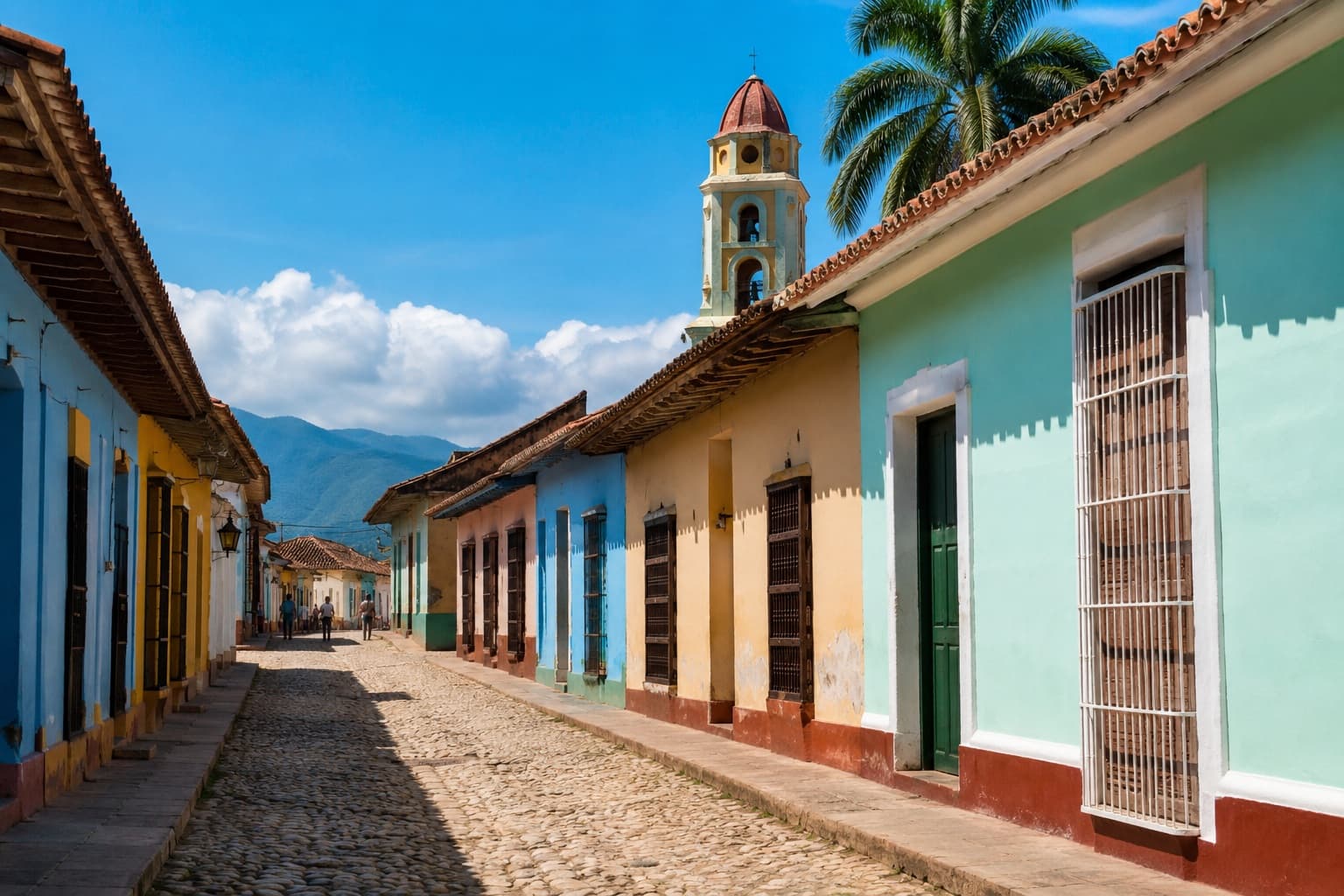
Its wealth came from sugar. The surrounding Valley of the Sugar Mills (Valle de los Ingenios) was once among the most productive sugar-growing regions in the world, and the mansions of Trinidad were built by the planter families who grew rich from it. The Manaca Iznaga tower, which rises above the valley, was used to watch over the enslaved workers laboring below.
That prosperity rested on the brutal labor of tens of thousands of enslaved Africans. Cuba Explained holds that history alongside the town's beauty: the elegant architecture and the suffering that financed it are inseparable parts of the same story.
When the sugar economy collapsed in the late 19th century, Trinidad was effectively frozen in time — too poor to modernize, and thus accidentally preserved. Today that very preservation is its fortune: Trinidad and the Valley of the Sugar Mills together form a UNESCO World Heritage Site.
Visitors come for the architecture, the live trova and son spilling from the Casa de la Música steps at night, and the nearby beaches and mountains. For Cubans, Trinidad is a window onto the colonial world that shaped the island long before the revolution.