
Santiago de Cuba
The cradle of Cuban music and a center of revolution, history, and Afro-Cuban culture in the east.
Santiago de Cuba, near the island's eastern tip, is Cuba's second-largest city and arguably its most culturally distinctive. Founded in 1515, it served as the island's first capital before Havana eclipsed it, and it has long cultivated an identity proudly separate from the western capital.
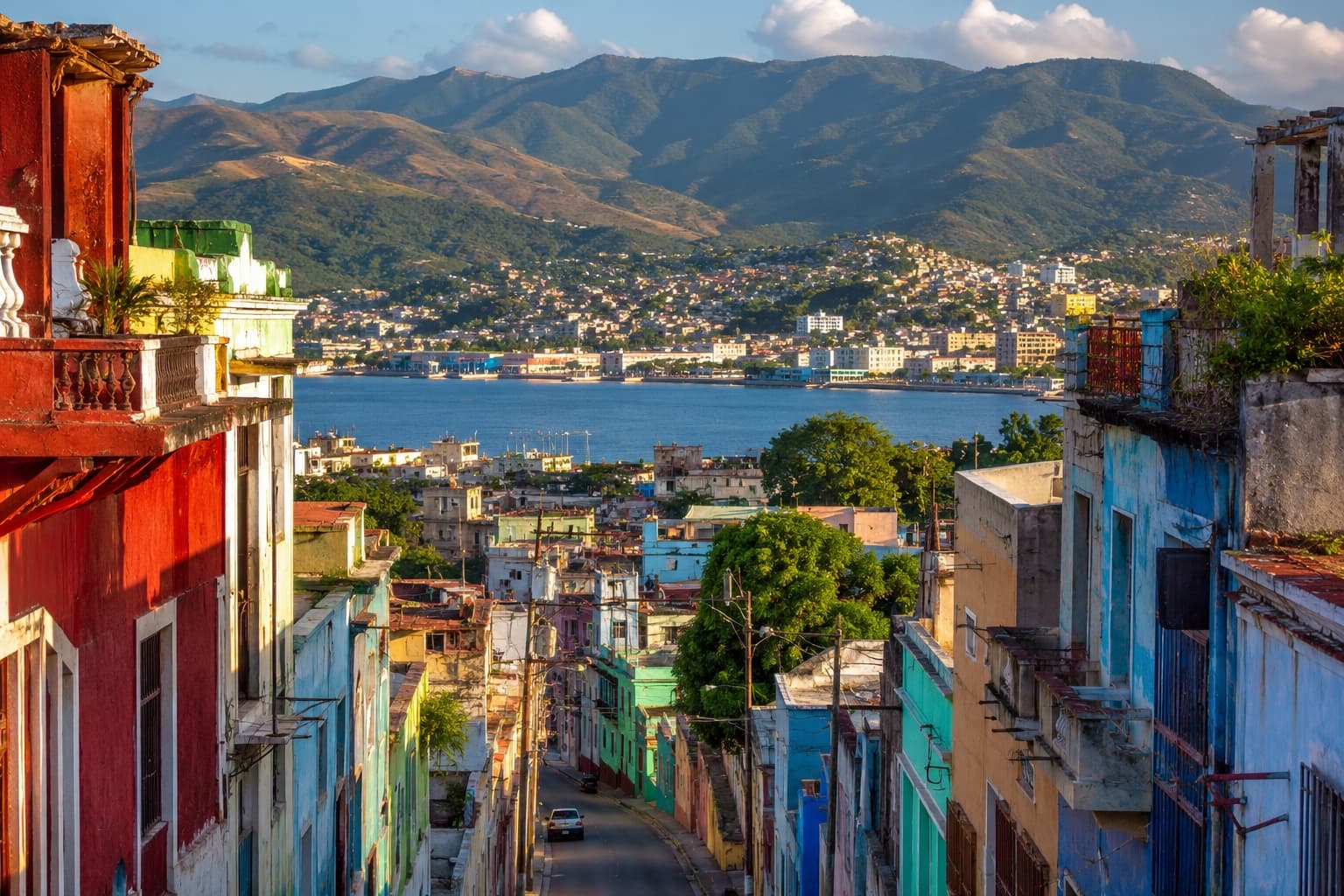
Santiago is often called the cradle of Cuban music. It is a birthplace of son — the rhythmic foundation that later shaped salsa — as well as trova and bolero. Its July Carnival, with conga lines, drums, and elaborate processions, is among the most exuberant celebrations in the Caribbean and a powerful expression of Afro-Cuban heritage.
That Afro-Cuban culture runs deep here. Shaped by the descendants of enslaved Africans and by French planters and their slaves who fled the Haitian Revolution, Santiago developed a religious, musical, and culinary culture markedly different from Havana's — visible in its Santería traditions and its distinctive cuisine.
Santiago has been a crucible of Cuban history. It was central to the 19th-century wars of independence, and on July 26, 1953, Fidel Castro led the failed assault on the Moncada Barracks that gave its name to his revolutionary movement. In 1959, Castro proclaimed the revolution's victory from the balcony of Santiago's city hall.
Ringed by the Sierra Maestra mountains and opening onto a sheltered bay guarded by the colonial fortress of El Morro, Santiago blends sea, mountains, and history into an identity all its own — hotter, more Caribbean, and more rebellious, as its residents like to say, than the capital to the west.