
Havana
Cuba's capital and largest city — a place of faded grandeur, pastel architecture, and deep exile memory.
Havana (La Habana) is Cuba's capital and the heart of its cultural and political life. Founded by the Spanish in 1519, it became one of the great cities of the Caribbean — a fortified port through which the wealth of the Americas flowed back to Spain. Its strategic harbor made it a prize fought over by pirates and empires alike, and the stone fortresses that still guard its entrance date from that era.
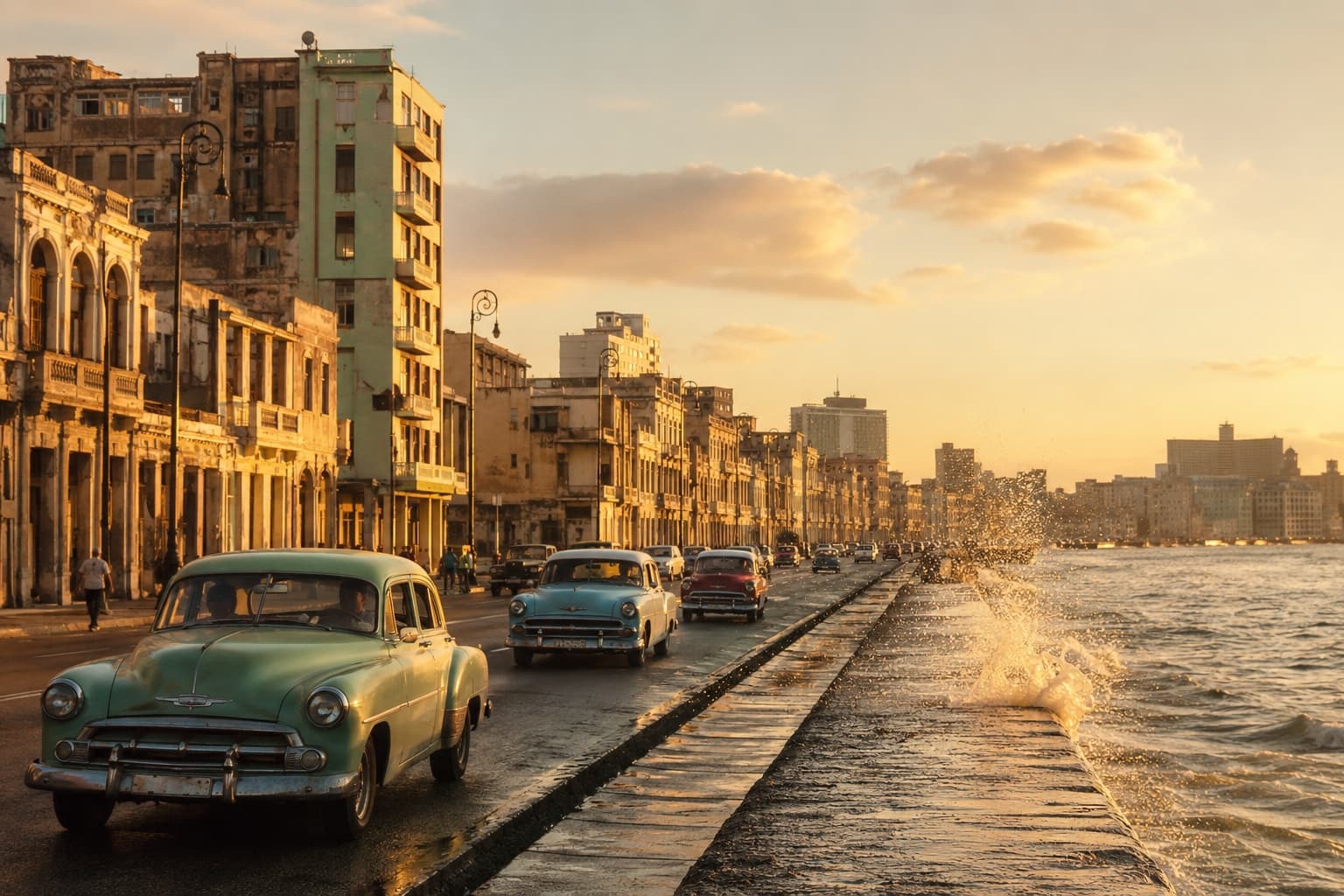
By the late 19th and early 20th centuries, Havana had grown into a cosmopolitan metropolis of grand boulevards, theaters, and mansions. The seaside Malecón, the ornate Gran Teatro, and the Capitolio — modeled on the U.S. Capitol — reflect an age of confidence and outward-facing ambition. Neighborhoods like Vedado and Miramar still carry the elegance of that pre-1959 world.
For exile families, Havana is often the city of memory — the place of childhood homes, family businesses, parish churches, and a way of life left behind. To walk its streets through photographs or recollection is, for many, to revisit a home that exists now mostly in the past tense.
Decades of scarce resources have left much of the city's architecture crumbling, producing Havana's bittersweet signature: beauty in decay. Grand facades stand water-stained and propped up; interior staircases open to the sky. The famous classic American cars on its streets endure not as nostalgia but out of necessity, kept alive by generations of improvised repair.
Old Havana (Habana Vieja), a UNESCO World Heritage Site since 1982, draws visitors to its restored plazas, baroque cathedral, and cobblestone streets. The contrast between the polished tourist core and the worn neighborhoods just beyond it captures, in miniature, many of the tensions of contemporary Cuban life.
Havana remains the stage on which Cuba's largest dramas unfold — from revolutionary rallies to the 2021 protests — and the enduring symbol of the island for Cubans on both shores.