
Fidel Castro
1926–2016
Revolutionary leader and longtime ruler of Cuba
Fidel Castro led the revolution that overthrew Batista in 1959 and ruled Cuba — as prime minister and then president — for nearly fifty years, until handing power to his brother Raúl in the late 2000s.
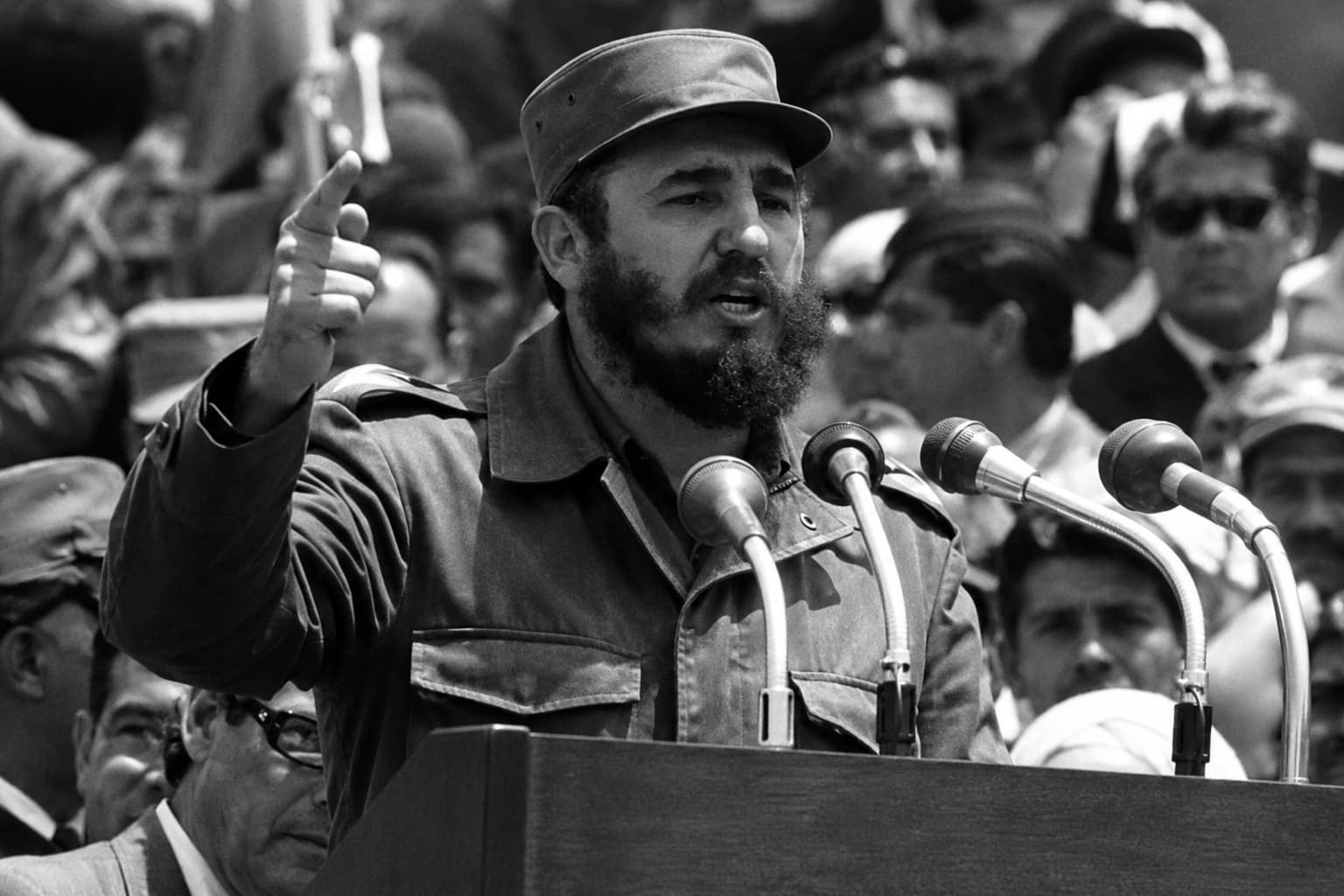
Around the world he is viewed in sharply different ways: to some a symbol of anti-imperialism and social programs, to others the architect of a repressive one-party state that jailed dissidents and drove millions into exile.
Castro is remembered above all for the confiscations, censorship, imprisonment, and loss of freedom that defined his rule. Cuba Explained presents both the competing global views and the exile community's lived experience.
In the first months of 1959, the firing squads at La Cabaña fortress and prisons across the island carried out summary executions after trials that often lasted minutes. Families were given no real defense, no appeal, and sometimes no body to bury. Tens of thousands more were imprisoned for the crime of disagreeing.
Private farms, businesses, and homes were seized in the name of the people. Neighbors were turned into informants through the Committees for the Defense of the Revolution, and a knock at the door in the night became a permanent fear. Those who tried to leave often forfeited everything they owned.
More than a million Cubans fled — on planes, on rafts, and through the waters of the Florida Straits where untold numbers drowned. Every exile family carries a list of the missing, the imprisoned, and the dead. For them Castro is not an abstraction or a poster, but the man whose orders emptied their homes and silenced their loved ones.